

CG Policy · 2025
In this section7 topics
Corporate Governance Policy
Has a Corporate Governance Policy
Yes
Policy Description
The Company encourages compliance with good corporate governance and business ethics, communicates with all directors, executives and employees to recognize and acknowledge the importance of good corporate governance and business ethics by having all employees study, understand and sign acknowledgement in order to adhere to operational practices. It also publishes good corporate governance policies on the Company's website and follows up on the overall compliance with the corporate governance policy by assigning relevant parties to take action and report to the Board. For example, it has appointed the Audit Committee to oversee conflicts of interest, internal control and audit, compliance with the laws and regulations of the relevant authorities, and report the results to the Board on a quarterly basis; it has designated the Company Secretary to oversee the reports of securities holdings of directors and management and report the results to the Board on a quarterly basis, etc.
Policy Document Link
https://www.thairelife.co.th/upload/corporategovernance/filet_230221163635.pdf
Policy & Practices — Board of Directors
Has Policy & Guidelines for the Board
Yes
Board Guidelines
| Guideline | Other — Please Specify | Detail | Document Link | Page Number in Report |
|---|---|---|---|---|
| Nomination of Directors | Nomination of Directors and Top Management The Nomination and Remuneration Committee is responsible for recruiting qualified people in accordance with the Company's business strategy to serve as directors and members of sub-committees based on their knowledge, competence, expertise and previous work experiences, which can fulfill the requirements of the vacancies. The Board Skill Matrix is used as a tool to evaluate the qualifications of all directors in the consideration, including the independence of the directors in case of the nomination of independent directors, which the Company shall verify the eligibility of the nominated persons that it does not contravene the applicable law. The Nomination and Remuneration Committee shall review the list of eligible persons from the Director Pool of the Thai Institute of Directors Association (IOD), from nominations by individual directors, from the directors who have accepted the extended term, and from the nominations by shareholders who have been scrutinized as qualified by applicable laws and relevant criteria (if any) in order to present to the Board of Directors. After the Board of Directors has approved the nominated directors, the Company will conduct discussions and requests for approval from the Office of the Insurance Commission (OIC), before presenting to the shareholders' meeting (depending on the case) for further appointment. | |||
| Determination of Director Remuneration | Remuneration for the Board of Directors and Top Management The Board of Directors has appropriately considered the remuneration for the directors, sub-committee and senior management for the duties, responsibilities and participation of each director. And can compare with other businesses in the same industry or similar to the company. The Board of Directors assigns the Nomination and Remuneration Committee responsible for establishing and reviewing criteria, policies, and forms of consideration for compensation or other benefits to the Board of Directors and all sub-committees for submission to the Board of Directors for approval before proposing to the shareholders' meeting for consideration and approval annually. The Board of Directors does not have any other remuneration or welfare other than meeting fee and gratuity. | |||
| Independence of the Board of Directors from the Management | The Board of Directors has clearly segregated the roles, duties, and responsibilities of the Board of Directors, the Chairman of the Board, the Managing Director, and the Management. The Managing Director and the Management are responsible for overseeing the Company’s normal day-to-day operations, while the Board does not engage in routine operational management but instead provides support and strategic guidance to the Management through the Managing Director on a regular basis. The Managing Director is accountable for the overall management of the Company within the scope of authority approved by the Board of Directors and in compliance with applicable laws and regulations, including, among others, investment decisions, transactions that may materially affect the Company, connected transactions, acquisition or disposal of assets, and dividend payments. The segregation of authority and responsibilities has been communicated to all executives and employees for acknowledgment and strict adherence. | |||
| Director Development | The Board of Directors has always given importance to the development of directors. It has a policy to encourage directors to continually develop their knowledge and to attend development, training, attend seminars or exchange learning between directors (peer learning) in order to increase their knowledge in various fields related to their roles and responsibilities. Assigned both as directors and committees of various sub-committees to keep abreast of changes in business environment, such as Corporate governance, information technology, and sustainable development both organized by the Stock Exchange of Thailand, the Securities and Exchange Commission, Thai Institute of Directors Association, Office of Insurance Commission, Including other agencies and organizations. The company regularly informs directors of training courses or seminar activities. The details of directors’ training and development are available under the section “Information on Directors’ Development.” | |||
| Board Performance Evaluation | Self-assessment by the Board of Directors and sub committees Annually, each member of the board is required to evaluate the overall performance of the Board of Directors. The purpose of this is to jointly review performance, problems and obstacles in the past year. The result will be used as a guideline to improve the work of the Board of Directors to ensure greater effectiveness and efficiency. The assessment is divided into 3 categories; (1) Evaluation for the whole Board of Directors (2) Self-evaluation of all sub-committees, and (3) Self-evaluation for individual directors Details of the Board of Directors’ self-assessment results for 2025 are available under the section “Board of Directors and Sub-Committee Self-Assessment.” | |||
| Corporate Governance of Subsidiaries and Associated Companies | The Company has a mechanism to supervise the operations of associated companies by appointing directors and executives of the company to be directors and executives of the associated company by persons appointed as directors and executives of subsidiaries and associated companies It is responsible for supervising, controlling, and monitoring operations for the benefit of the business for that company and the company itself. | |||
| Other guidelines regarding the board of directors | Directors’ Code of Ethics | The Company expects its directors to perform their duties with honesty, integrity, prudence, and due care, reflecting the Company’s commitment to conducting business with transparency and ethical standards for the benefit of shareholders and all stakeholders. The directors shall observe the following principles:
| https://www.thairelife.co.th/upload/corporategovernance/filet_240530140050.pdf | 21 |
Code of Conduct
Has a Business Code of Conduct
Yes
Code of Conduct Description
The Board of Directors has approved the ethics and business code of conduct, which comprises good practices in business operations, the business code of conduct, the directors' code of conduct, and the employees' code of conduct. This ethics and business code of conduct is considered a discipline that requires all directors, executives, and employees to strictly adhere to.
The business code of conduct, the Company emphasizes ensuring adherence to the business code of conduct in various areas, including: 1) Good treatment of shareholders, both in terms of fundamental rights and the provision of investor relations activities; 2) Good treatment of employees, emphasizing the development and enhancement of employee capabilities, including compensation, and focusing on providing facilities to ensure efficient performance of duties; 3) Good treatment of customers (life insurance companies), both in terms of providing satisfaction, offering products and services that meet customer needs, maintaining sustainable relationships, and ensuring confidentiality and management of customer data; 4) Good treatment of business partners, trade competitors, and creditors, by adhering to a framework of honest, free, and fair trade competition within the legal framework; 5) Good practices towards regulatory bodies, both in terms of cooperation and coordination on various matters to enhance the efficiency of good management; 6) Good practices towards the community, society, and environment, by conducting business with social responsibility.
The Code of Conduct for the Company's Directors, Executives, and Employees comprises ethical practices based on principles in various areas, including: 1) Principles of Corporate Governance and Good Corporate Governance; 2) Consideration of the interests of all stakeholders, reputation, and integrity; 3) Conflicts of Interest; 4) Providing Information and Expressing Opinions to the Public; 5) Confidentiality of Information; 6) Use of Inside Information for Trading Company Shares; 7) Anti-Corruption, including Giving and Receiving Gifts, Presents, and Hospitality; 8) Anti-Money Laundering and Counter-Terrorism Financing, and Counter-Proliferation of Weapons of Mass Destruction; 9) Company Safety and Assets; 10) Exercise of Political Rights; 11) Gambling and Vices; 12) Reporting Complaints or Whistleblowing.
The Board of Directors has regularly reviewed the suitability and sufficiency of the ethics and business code of conduct to ensure compliance with international good corporate governance practices. Details can be found on the Company's website under the topics "Good Corporate Governance" and "Ethics and Business Code of Conduct." In 2025, no directors, executives, or employees committed any acts in violation of the Company's ethics and business code of conduct.
Code of Conduct Link
https://www.thairelife.co.th/upload/corporategovernance/filee_240530140050.pdf
Code of Conduct Practices
| Guideline | Detail | Document Link | Page Number in Report |
|---|---|---|---|
| Prevention of Misuse of Inside Information | As directors and employees of the Company may use opportunities arising from their positions as directors, executives, or employees to seek personal gain, which may constitute a conflict between personal interests and the Company's interests and impact the Company's operations, due to the following significant reasons:
To ensure fairness to all stakeholders, guidelines have been established for the Company's directors, executives, and employees within the Conflict of Interest Prevention Policy. | https://www.thairelife.co.th/upload/corporategovernance/filet_240904115415.pdf | |
| Anti-corruption | The Company has established an anti-corruption policy, as well as a Code of Ethics and Business Conduct. Since 2014, the Company has set out guidelines and practices concerning customers, business partners, government agencies, and private sector entities, which all directors, executives, and employees are required to uphold and comply with. In addition, the Company has implemented policies on the prevention of conflicts of interest and the use of inside information, with the objective of ensuring transparency and accountability in the performance of duties, in line with the Company’s principles of good corporate governance. To ensure that the Company’s decision-making and operations are consistent with the established policies and do not give rise to corruption risks, the Company has established written anti-corruption measures. These measures compile relevant policies, regulations, guidelines, and procedures related to anti-corruption practices, which have been publicly disclosed and communicated to employees through various channels, such as training programs, internal communications, and the Form 56-1 One Report. | https://www.thairelife.co.th/upload/corporategovernance/filet_240730144930.pdf | |
| Whistleblowing and Protection of Whistleblowers | The Board of Directors places great importance on ensuring that the Company’s operations are conducted in accordance with ethics and the Code of Business Conduct. The Board also oversees that the Company establishes effective and efficient policies on good corporate governance, internal control, anti-corruption measures, as well as other related policies and regulations. Supervisors of the relevant departments, together with the Human Capital Management and Development Department and the Administration Department, are responsible for providing support and oversight, as well as serving as role models in complying with the Company’s policies. They also supervise and provide guidance and fairness to employees or external whistleblowers, with the aim of ensuring that employees perform their duties with integrity and that the Company conducts its business with transparency, without any misconduct, fraud, corruption, or violations of rights occurring within the Company. | https://www.thairelife.co.th/upload/corporategovernance/filet_240530141156.pdf | |
| Preventing the Misuse of Inside Information | The Company recognizes the importance of good corporate governance in order to ensure fairness and equitable treatment of all groups of stakeholders. In the course of the Company’s operations, there may be circumstances in which directors, executives, employees, and related persons are required to consider and become aware of certain information that may affect the Company’s securities prices and cannot yet be disclosed to shareholders, investors, or the general public. Therefore, the use of the Company’s inside information must be properly managed to prevent any leakage or misuse for inappropriate purposes, which could result in unfair advantages to certain parties. Such actions would not only constitute a violation of the law but could also adversely affect the Company’s reputation and credibility. The Board of Directors has therefore established the Insider Information Policy to ensure that all directors, executives, and employees strictly comply with the policy and that it is properly communicated throughout the organization. | https://www.thairelife.co.th/upload/corporategovernance/filet_230221163444.pdf | |
| Prevention of money laundering | The Company has established this Policy on Anti-Money Laundering and Combating the Financing of Terrorism and Proliferation of Weapons of Mass Destruction, which was approved by the resolution of the Board of Directors’ Meeting on 25 February 2025. This policy is considered a key corporate policy and is regarded as being of equal importance to other core policies governing the Company’s business operations. Accordingly, all executives and employees are required to strictly comply with this policy. However, as the Company’s core business is life reinsurance, which involves business-to-business transactions, it differs from general life insurance operations. In other words, the Company primarily conducts transactions with life insurance companies as its clients. Therefore, the Company is not required to conduct customer onboarding processes with individual policyholders, except in cases where the Company invests in other businesses in accordance with the Office of Insurance Commission’s Notification on Investment in Other Businesses of Life Insurance Companies, or engages in general business transactions with external parties. | https://www.thairelife.co.th/upload/corporategovernance/filet_250416180140.pdf | |
| Giving or receiving gifts, entertainment, or business entertainment | The Company has established a policy that the giving or receiving of gifts and hospitality must be conducted within reasonable limits and in accordance with customary practices. Such activities must be for legitimate business purposes or for enhancing the Company’s reputation, contributing to the development of commercial goodwill, strengthening business relationships, and supporting the operational efficiency of business partners, which ultimately benefits the Company. Appropriate occasions may include business hospitality, promotional activities, training programs, study visits, or membership fees for clubs or associations, in accordance with the Company’s delegated authority and regulations on receipt and disbursement of funds. The Company does not have a policy of giving or receiving items of excessive value, in order to prevent any form of inducement that may influence the recipient to perform or refrain from performing duties, which could lead to corruption. This policy has been communicated to all executives and employees through internal communication channels, and the relevant guidelines have been incorporated into the Company’s Anti-Corruption Policy and Measures. | https://www.thairelife.co.th/upload/corporategovernance/filet_240730144930.pdf | 13 |
| Compliance with laws, rules and regulations | The Company has established a Compliance function to support the Audit Committee. The function operates independently and reports directly to the Audit Committee. Its responsibilities include overseeing the Company’s compliance with the Life Insurance Act, regulations of the Office of Insurance Commission (OIC), and other laws and regulations relevant to the Company’s business operations. The responsibilities of the Company’s Compliance function include, at a minimum, the following:
| https://www.thairelife.co.th/upload/corporategovernance/filet_240530140050.pdf | 15 |
| Cyber security | The Company has established an Information Security and Personal Data Management Committee and working team to support information security operations, organizational governance during emergency situations, business continuity management, privacy and personal data management, and cybersecurity, in compliance with relevant regulations, rules, and laws applicable to the Company’s business operations. The Company has also established and implemented the Regulations on Information System Security and Cybersecurity, covering computer networks, computer systems, information systems, computer equipment, as well as information data, computer data, and electronic data. The objective is to ensure that the use of computer networks is conducted properly and efficiently in accordance with international standards, and to prevent potential issues arising from improper use of computer networks. The key practices are as follows:
| https://www.thairelife.co.th/upload/corporategovernance/filet_240530140050.pdf | 13 |
| Environmental management |
| https://www.thairelife.co.th/upload/corporategovernance/filet_240530140050.pdf | 24 |
| Human rights |
| https://www.thairelife.co.th/upload/corporategovernance/filet_240530140050.pdf | 11 |
| Occupational health and safety | The Company places great importance on safety, occupational health, and environmental conditions in the workplace and is committed to continuously improving employees’ quality of working life. Accordingly, the Company has implemented the following measures:
| https://www.thairelife.co.th/upload/corporategovernance/filet_240530140050.pdf | 20 |
Promoting Compliance with the Code of Conduct
Promotes Compliance by Directors, Executives and Employees
Yes
Description
The company promotes adherence to ethics and business conduct. Communication is provided to all directors, executives, and employees to ensure widespread awareness and understanding of the importance of ethics and business conduct. All employees are informed and educated to adopt these as operational guidelines. Furthermore, the ethics and business conduct are published on the company's website and Intranet system.
Directors and executives should lead by example in their conduct for employees. Supervisors should ensure that employees under their supervision are aware of, understand, and strictly adhere to the ethics and business conduct. Ignorance of the guidelines set forth in this ethics and business conduct cannot be claimed as an excuse.
The Human Capital Management and Development Department is responsible for clarifying the duties regarding compliance with ethics and business conduct for new employees and executives.
Should there be any doubts or uncertainties regarding compliance with this ethics and business conduct, please consult your supervisor or the department responsible for overseeing adherence to this ethics and business conduct.
This ethics and business conduct serves as a discipline that all directors, executives, and employees must strictly adhere to. Those who violate or fail to comply will be investigated and appropriately disciplined, potentially leading to termination of employment. If an action is believed to be illegal, legal proceedings may be initiated. The following actions are considered violations of the code of conduct:
(1) Violating or failing to comply with the code of conduct.
(2) Advising, promoting, or supporting others to violate or not comply with the code of conduct.
(3) Neglecting or ignoring violations or non-compliance with the code of conduct when one knows or should know due to involvement with duties under their responsibility.
(4) Failing to cooperate with or obstructing investigations to ascertain facts regarding alleged
violations or non-compliance with the code of conduct.
(5) Unfair actions against others due to their reporting of violations or non-compliance with the code of conduct.
The Board of Directors mandates annual meetings, or when necessary, to review the suitability and sufficiency of the ethics and business conduct to ensure alignment with international corporate governance standards.
Process Document Link
https://www.thairelife.co.th/upload/corporategovernance/filet_240530140050.pdf
Page Number in Report
4
Anti-Corruption Networks & Projects
Introduction
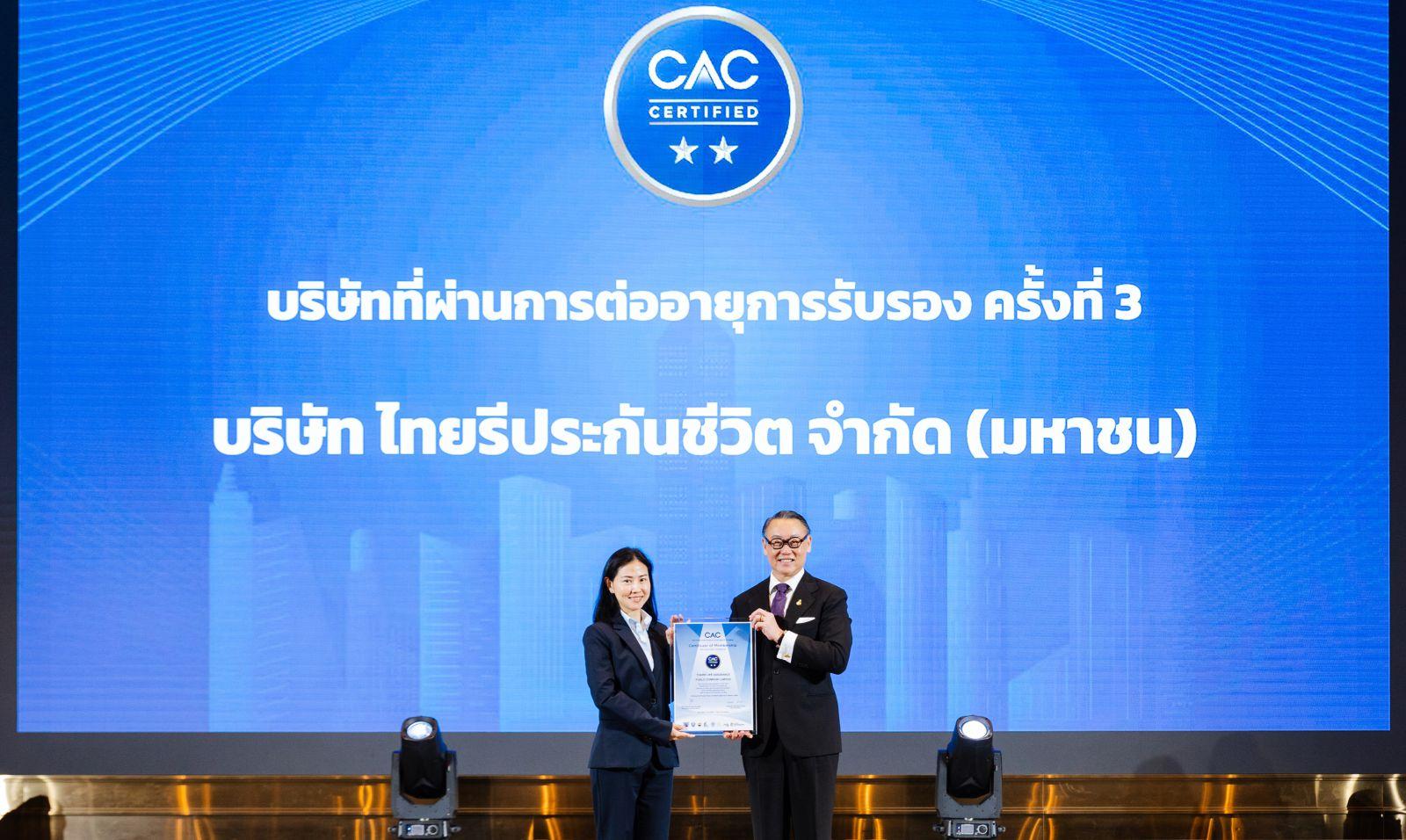
Joined or Declared Intent to Join Anti-Corruption Networks
Yes
Networks & Projects Joined
| Network / Project | Network Name — Please Specify | CAC Certified |
|---|---|---|
| Thai Private Sector Collective Action Against Corruption: CAC | Y | |
| United Nations Global Compact (UNGC) | ||
| Participation of anti-Corruption networks and initiatives | Report Solicitation Project organized by CAC and the NACC Office |
Material Changes & Developments in CG
Introduction
At the Board of Directors’ Meeting No. 2/2025 held on 9 May 2025, the Board reviewed the Company’s Corporate Governance Policy and concluded that it remains consistent with and appropriate to the current business environment. The current Corporate Governance Policy was last reviewed in August 2018. Accordingly, amendments were proposed to enhance clarity and comprehensiveness of the policy as follows:
To enhance clarity in the introduction by specifying the principles on which the Corporate Governance Policy is based and by stating that the Company has separately established detailed Corporate Governance Guidelines.
To clarify the oversight role of the Board of Directors and the management role of the Managing Director, and to specify that the detailed duties and responsibilities of the Board are prescribed in the Board Charter.
To specify that details regarding ethical conduct and the Code of Business Ethics applicable to each group of stakeholders are set out in separate guidelines established by the Company.
To enhance clarity regarding the importance of the collection, use, and protection of personal data of customers and related parties, in accordance with the Privacy Policy.
To enhance clarity regarding channels for public disclosure of information, covering both financial and non-financial information.
To include provisions on engagement between the Company and stakeholders other than shareholders.
To enhance clarity regarding the Company’s policy of refusing to engage in corruption and bribery, including the policy not to employ government officials who directly supervise or regulate the Company.
To grant authority to management to review the appropriateness and adequacy of this policy on an annual basis. Any material amendments shall require approval from the Board of Directors.
Reviewed the CG Policy or Board Charter in the Past Year
Yes
Material Changes or Developments in the Past Year
Yes
Policy Review — Description
In 2025, the Company has developed important operations regarding corporate governance both as policies and practices with summary as follows:
The Board of Director reviewed of the Company’s Corporate Governance Policy indicated that, overall, the policy remains appropriate and in alignment with relevant principles. However, certain aspects were clarified and expanded to ensure more comprehensive coverage. In addition, the Company reviewed the Charter of the Board of Directors and the charters of sub-committees to ensure their appropriateness and alignment with the current business environment. The review covered, among others, the delegation of authorities, the annual performance evaluation of senior executives, the consideration of employee welfare and benefits, as well as the framework and policy for risk management. Emphasis was also placed on ensuring that business strategies are appropriately linked to the risk management framework and policy, as well as the business plans for the current year and the subsequent two years.
The Board reviewed and resolved to approve the Company’s corporate governance–related policies for the year 2025, including the Corporate Governance Policy and the Core Policy on Anti-Money Laundering, Counter-Terrorist Financing, and the Proliferation Financing of Weapons of Mass Destruction. These policies were revised to ensure their suitability for the Company’s business operations and consistency with its practices.
The Board also discussed the results of the Board performance evaluation for the year 2024, including observations on operational practices, issues, and challenges encountered in the performance of duties, with the aim of enhancing the effectiveness of the Board going forward. In addition, the Board reviewed the appropriateness of the structure of the Board of Directors and its sub-committees, in light of the vacancy of the Chairman of the Board position during the year and the appointment of newly elected directors. This review was conducted to ensure that each committee possesses appropriate qualifications and complies with the prescribed composition requirements. In this regard, the Board considered the Board Skill Matrix, including board size, membership, diversity in terms of age, gender, and other relevant factors, in order to assess the overall qualifications of all directors, as well as their independence in expressing opinions on the operations of various sub-committees. Furthermore, the Company Secretary prepared individual director development programs (Training Needs) by selecting appropriate courses based on key development priorities. These programs serve as tools to enhance directors’ knowledge, skills, and experience that are beneficial to effective corporate governance.
In addition, human resources development is important to drive the organization according to the strategies of the Company. In 2025, the Board of Directors assigned the Nomination and Remuneration Committee to implement Human Resources Management System (HRMS), which covers Succession Plan of the senior management and critical positions of the Company, and the development of Organization chart under scope of work and responsibilities of the senior management. In this regard, the Nomination and Remuneration Committee held meetings to discuss and follow up on the progress of the issues regularly every quarter.
CG Code — Introduction
The Board of Directors has adhered to the announcement on good corporate governance of life insurance companies, issued by the Office of the Insurance Commission, and the Corporate Governance Code B.E.2560 (2017), or CG Code, issued by the Securities and Exchange Commission, in order to apply in the context of the Company and has reviewed the Company's policies relating to good corporate governance in accordance with such principles at least once a year. However, there are still some parts that the Company has performs differently from aforementioned the good corporate governance principles.
Implements the CG Code for Listed Companies
No
CG Code — Description
Matters which still have not implemented in Corporate Governance Principles
1. The Chairman of the Board Should Be an Independent Director
The company's consideration :The Board of Directors is of the view that, in order to maintain an appropriate balance in corporate governance where the Chairman of the Board is not an independent director, Mr. Nophadon Ruengchinda was appointed as the “Lead Independent Director.” The Lead Independent Director serves to provide checks and balances and acts as a representative of the Chairman’s “Independent Conscience.” In this regard, the Board has prescribed that, in cases where the Chairman of the Board is not an independent director, the Lead Independent Director shall perform the following roles and duties:
Chairman of the Board | Lead Independent Director | |
Board Meeting | Convene Board meetings and act as the Chairman of the meeting. | Act as the Chairman of the meeting in cases where the Chairman of the Board is unable to perform such duties. |
Board Meeting Agenda | Take primary responsibility for determining the Board meeting agenda, with recommendations from the Lead Independent Director. | Work jointly with the Chairman of the Board and/or directors and management in determining the Board meeting agenda. |
Communication among Directors | Serve as the primary facilitator of communication among all directors. | Act as a representative of independent directors in communicating or consulting with the Chairman of the Board and/or directors and management. |
2. The Company should include in its policy a requirement that directors and senior executives must notify the Board or designated person of their intention to trade THREL shares at least one day in advance of the transaction date.
The company's consideration : At present, there is no such requirement in the company’s policy, but the company already has in place clear regulations against insider trading. These regulations include Directors Code of Conduct; Employee Code of Conduct; Executives Code of Conduct; Internal Information disclosure policy, director and executives insider trading rules; guidelines on declaration of securities holding by directors and executives; and non-trading period rules applicable to directors, executives and employees.
The Board of Directors should consider to appoint the Sustainability Committee comprising at least 1 director as well as disclose the charter as well as roles and duties.
3. The Board of Directors should consider to appoint the Sustainability Committee comprising at least 1 director as well as disclose the charter as well as roles and duties.
The company's consideration : The Company has not appointed the Sustainability Committee. However, the Company has practiced sustainability through the sustainability working group with members coming from each department in the organization, e.g. the management with the Chief Executive Officer as a representative from the Board, corporate strategy department, human resources department, administrative department, etc. Also, the achievement of goals in sustainability was monitored and followed up by executive committee, and the performances were included in the sustainability report of the Company.
4. The Board of Directors should clearly specify in the corporate governance policy the term of office of an independent director to be not longer than nine years and without any exception.
The company's consideration : The Board of Directors has not determined the term of office of an independent director because the Company is confident that its independent directors have profound knowledge, competence, experience and understanding of the nature of its business operation and could independently provide their opinion and advice that are useful to the Company. They are not, or have no connection with, the Company’s major shareholders or persons with control power; are not induced or manipulated by the management; and meet the independent director’s qualifications prescribed by the SEC. Besides, it is somewhat difficult to find new independent directors in the industry sector where the Company operates business.
Other CG Performance & Outcomes
In 2025, the Company received awards related to the compliance with its principle of good corporate governance and sustainability as follows:
Thaire Life has been assessed as a Thailand Sustainability Investment or SET ESG Ratings, 1 of 265 companies, continuously for the four year, reflecting the company's excellent corporate governance, taking into consideration shareholders and stakeholders and strive to create sustainability for both business, society, and the environment from the Stock Exchange of Thailand.
Thaire Life also received an “Excellent” rating for its 2025 assessment in Thailand’s Corporate Governance Report (CGR) by the Thai Institute of Directors Association (IOD), marking its 9thconsecutive year for this recognition since 2016.
Thaire Life obtained the quality assessment of the 2025 Annual General Meeting of Shareholders (AGM Checklist) by the Thai Investors Association. Association of listed companies and the Office of the Securities and Exchange Commission for the year 2025 with 100/100 points, which is in the level of "Excellent” continuing its achievement record since 2017.
Thaire Life received the Outstanding Investor Relations Award at the SET Awards 2025, organized by the Stock Exchange of Thailand in collaboration with Money & Banking Magazine. The award reflects the Company’s continuous efforts to enhance the quality of its information disclosure and communication processes, ensuring that information is comprehensive, timely, and easily accessible, as well as its commitment to building investor confidence through effective and ongoing investor relations management.